
Composite Building Materials: Modern Construction Solutions

The construction industry continues to evolve with innovative solutions that address modern challenges such as sustainability, durability, and cost-effectiveness. Among these advancements, composite building materials have emerged as game-changers, offering unique properties that surpass traditional single-material solutions. These engineered materials combine two or more constituent materials with different physical or chemical properties, creating a final product that exhibits characteristics superior to its individual components. Understanding the fundamentals, applications, and benefits of these materials is essential for construction professionals seeking to optimize project outcomes in 2026 and beyond.
Understanding Composite Building Materials
Composite materials consist of a matrix material and a reinforcement component working together to achieve enhanced performance characteristics. The matrix, typically a polymer resin, metal, or ceramic, binds the reinforcement fibers or particles together while transferring loads between them. This synergistic relationship produces materials with improved strength-to-weight ratios, corrosion resistance, and design flexibility compared to conventional building materials.
Core Components and Structure
The reinforcement phase in composite building materials provides structural strength and stiffness. Common reinforcement materials include:
Glass fibers for general-purpose applications
Carbon fibers for high-strength, lightweight requirements
Aramid fibers for impact resistance
Natural fibers like hemp or flax for sustainable solutions
The matrix phase surrounds and protects the reinforcement while distributing stresses throughout the material. Thermosetting resins such as epoxy, polyester, and vinyl ester dominate the construction sector due to their excellent mechanical properties and chemical resistance. The interface between matrix and reinforcement plays a critical role in determining the overall performance of the composite material.
Types of Composite Building Materials
Fiber-Reinforced Polymers (FRP)
FRP composites represent the most common category in modern construction. These materials combine continuous or discontinuous fibers with polymer matrices to create lightweight, high-strength components. Glass fiber-reinforced polymers (GFRP) offer excellent cost-performance ratios for applications like cladding panels, bridge decks, and architectural elements. Carbon fiber-reinforced polymers (CFRP) provide exceptional strength and stiffness, making them ideal for structural reinforcement and seismic retrofitting projects.
Wood-Plastic Composites
Wood-plastic composites merge wood fibers or flour with thermoplastic polymers to create durable, low-maintenance products. These materials excel in outdoor applications such as decking, railings, and fencing where traditional wood would deteriorate from moisture exposure. The composite nature provides dimensional stability and resistance to rot, insects, and weathering while maintaining a natural wood appearance.
Composite Type | Primary Matrix | Common Reinforcement | Key Applications |
GFRP | Polyester, Vinyl Ester | Glass Fibers | Panels, Gratings, Tanks |
CFRP | Epoxy | Carbon Fibers | Structural Reinforcement |
Wood-Plastic | Polyethylene, PVC | Wood Fibers | Decking, Exterior Trim |
Fiber Cement | Portland Cement | Cellulose Fibers | Siding, Roofing |
Metal Matrix Composites
Metal matrix composites incorporate ceramic or carbon reinforcements into metal matrices like aluminum or titanium. While less common in general building construction, these materials find specialized applications in high-performance structures requiring exceptional thermal management or electromagnetic shielding properties.
Advantages of Composite Building Materials
Superior Strength-to-Weight Ratio
One of the most compelling advantages of composite building materials lies in their exceptional strength-to-weight ratio. This characteristic enables architects and engineers to design lighter structural elements that maintain or exceed the load-bearing capacity of traditional materials. Reduced structural weight translates to lower foundation requirements, decreased transportation costs, and simplified installation procedures.
Enhanced Durability and Longevity
Composite building materials demonstrate remarkable resistance to environmental degradation. Unlike steel, they don't corrode when exposed to moisture or chemical agents. Unlike wood, they resist rot, insect damage, and dimensional changes from humidity fluctuations. This inherent durability reduces maintenance requirements and extends service life, often exceeding 50 years with minimal intervention.
Design Flexibility and Customization
The manufacturing processes for composite materials allow unprecedented design freedom. Complex geometries, integrated features, and customized performance characteristics can be engineered directly into components during fabrication. This flexibility reduces assembly complexity and enables innovative architectural expressions impossible with conventional materials.
Moldable into complex three-dimensional shapes
Tailored fiber orientations for directional strength
Integrated color and surface textures
Variable cross-sectional properties within single components
Sustainability and Environmental Performance
Modern composite building materials increasingly incorporate sustainable and recycled inputs to minimize environmental impact. Bio-based resins derived from plant oils, recycled fiber reinforcements, and low-carbon manufacturing processes contribute to greener construction practices. The extended service life and reduced maintenance requirements of composites further enhance their environmental credentials through decreased resource consumption over building lifecycles.
Applications in Modern Construction
Structural Applications
Composite building materials increasingly serve structural functions in contemporary buildings. FRP reinforcing bars offer non-corrosive alternatives to traditional steel reinforcement in concrete structures exposed to aggressive environments like coastal regions or chemical facilities. Composite construction techniques combine materials strategically to optimize performance, such as steel-concrete composite beams that leverage the compressive strength of concrete and tensile strength of steel.
Bridge construction represents a significant growth area for structural composites. FRP bridge decks reduce dead loads while providing superior resistance to deicing salt corrosion. All-composite pedestrian bridges demonstrate the material's capability to create entire structures with minimal maintenance requirements.
Exterior Cladding and Facades
Architectural composite panels transform building exteriors with lightweight, weather-resistant solutions. These panels combine aluminum skins with polymer cores or fiber-reinforced polymer faces with insulating cores. The resulting systems provide excellent thermal performance, design versatility, and long-term durability while significantly reducing installation time and structural support requirements.
When comparing different exterior material options, considerations extend beyond initial cost to include maintenance requirements and longevity. Composite cladding typically requires minimal upkeep compared to traditional timber, which needs regular treatment and painting to maintain appearance and performance.
Interior Systems and Finishes
Inside buildings, composite materials serve diverse functions from decorative panels to functional infrastructure. Fiber-reinforced gypsum boards provide enhanced impact resistance for high-traffic areas. Composite door and window frames offer superior thermal performance with minimal maintenance. Acoustic composite panels integrate sound-dampening properties with aesthetic appeal for commercial and institutional spaces.
Manufacturing and Quality Considerations
Production Methods
Several manufacturing processes produce composite building materials, each suited to specific product types and performance requirements:
Pultrusion - Continuous process pulling reinforcement fibers through resin bath and heated die, creating constant cross-section profiles like structural shapes and decking
Compression molding - Placing material in matched metal molds under heat and pressure, ideal for complex shapes with excellent surface finish
Filament winding - Winding resin-impregnated fibers around mandrels to create cylindrical or spherical structures like tanks and pipes
Hand layup and spray-up - Manual application methods for large, low-volume components requiring customization
Quality Assurance and Testing
Comprehensive testing and evaluation methods ensure composite building materials meet performance specifications and safety standards. Non-destructive testing techniques such as ultrasonic inspection, thermography, and acoustic emission monitoring detect internal defects, delamination, and fiber misalignment without damaging components. Destructive testing validates mechanical properties including tensile strength, flexural modulus, and impact resistance under various environmental conditions.
Regular quality control during manufacturing monitors critical parameters:
Fiber-to-resin ratio and distribution
Void content and porosity levels
Cure degree and cross-link density
Dimensional accuracy and surface quality
Integration with Traditional Materials
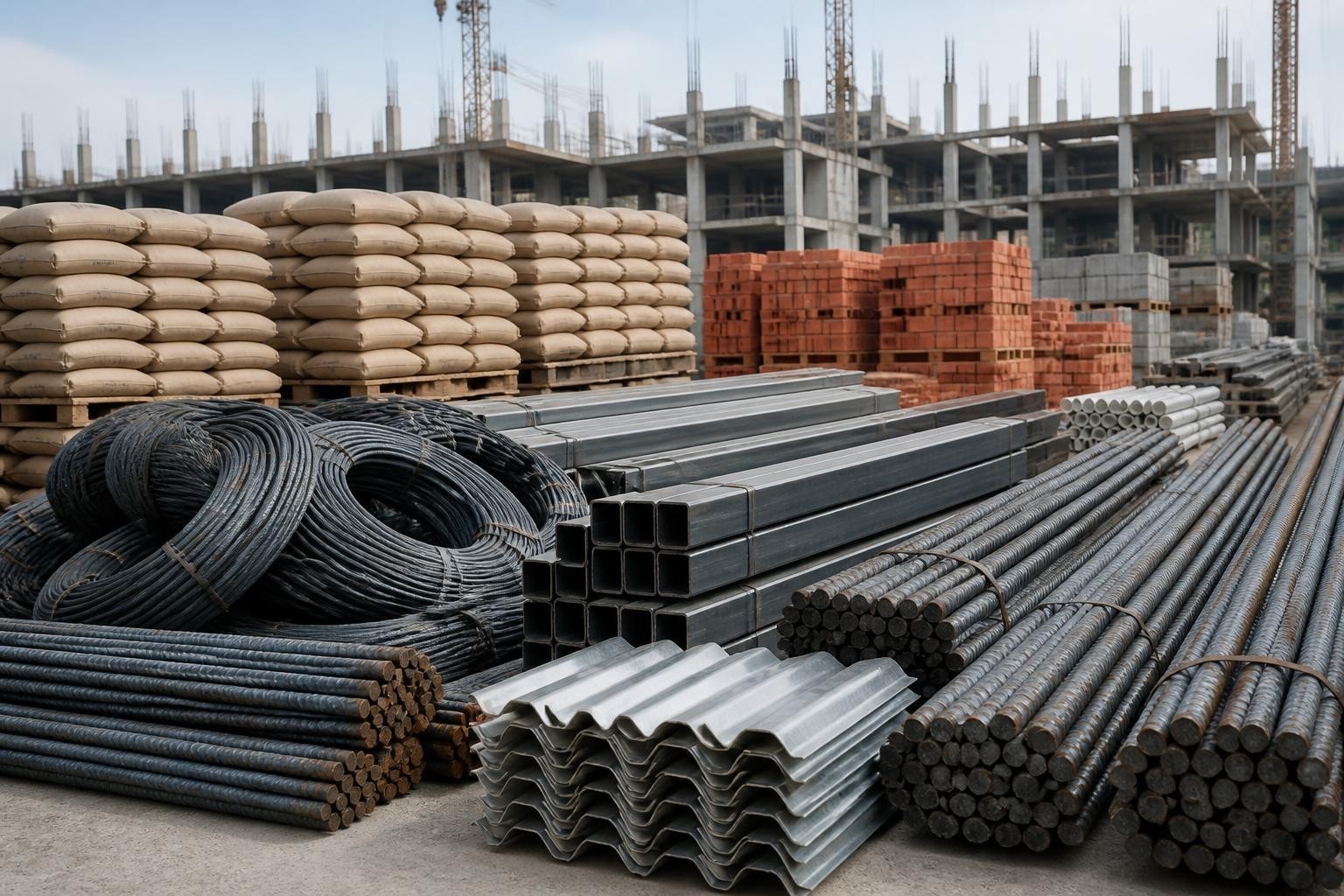
Modern construction frequently combines composite building materials with conventional materials to optimize overall system performance. For example, using galvanized steel sheets alongside composites creates cost-effective building envelopes that balance structural requirements with corrosion resistance. The Zinc Coated Galvanized Steel Sheet in Coils provides excellent durability when integrated with composite cladding systems, offering a hybrid approach that leverages the strengths of each material type.
Hybrid reinforcement systems in concrete structures utilize both traditional steel rebar and FRP bars strategically positioned to address specific performance criteria. Steel provides ductility in critical zones while FRP bars prevent corrosion in exposed areas. This integrated approach demonstrates how composite building materials enhance rather than replace traditional materials in many applications.
Material Compatibility
Successful integration requires careful consideration of material interactions. Thermal expansion coefficients must align to prevent stress concentrations at interfaces. Chemical compatibility between materials prevents degradation from galvanic corrosion or chemical reactions. Proper connection details accommodate different mechanical properties while ensuring load transfer efficiency.
Economic Considerations and Life-Cycle Analysis
Initial Cost vs. Total Cost of Ownership
While composite building materials often command higher initial purchase prices than traditional alternatives, comprehensive life-cycle cost analysis frequently reveals economic advantages. Reduced maintenance expenses, extended service life, and lower installation costs contribute to favorable total ownership economics.
Cost Factor | Traditional Materials | Composite Materials | Long-term Impact |
Initial Purchase | Lower | Higher | Immediate expense |
Installation Labor | Higher (heavier) | Lower (lighter) | Project timeline |
Maintenance Frequency | Annual to biennial | Minimal | Operating costs |
Service Life | 20-30 years | 40-50+ years | Replacement cycles |
Disposal/Recycling | Established | Developing | End-of-life costs |
Energy efficiency improvements from composite materials also generate ongoing operational savings. Superior insulation values reduce heating and cooling costs throughout building lifecycles. Lightweight structures require less embodied energy in foundations and supporting elements.
Future Trends and Innovations
Advanced Manufacturing Technologies
Automation and digital fabrication are transforming composite manufacturing for construction applications. Robotic fiber placement systems achieve precise fiber orientations with minimal waste. Additive manufacturing techniques print continuous fiber-reinforced thermoplastic components with complex geometries directly from digital models. These technologies reduce production costs while expanding design possibilities.
Machine learning and artificial intelligence increasingly optimize composite material design and manufacturing processes. Predictive models analyze microstructural characteristics to forecast material behavior under various loading conditions. This capability accelerates development cycles and enables performance customization for specific project requirements.
Bio-Based and Recyclable Composites
Environmental concerns drive research into fully recyclable and bio-based composite building materials. Natural fiber reinforcements from agricultural waste streams offer renewable alternatives to synthetic fibers. Bio-derived resins from plant oils eliminate petroleum dependence while potentially providing carbon-negative solutions when combined with sustainable forestry practices.
Chemical recycling processes break down thermoset composites into constituent materials for reuse in new products. Mechanical recycling grinds composite waste into fillers for lower-grade applications. These emerging technologies address end-of-life concerns and support circular economy principles in construction.
Implementation Best Practices
Design Considerations
Successful application of composite building materials requires design approaches that leverage their unique characteristics. Unlike isotropic materials such as steel or aluminum, composites exhibit directional properties based on fiber orientation. Designers must account for anisotropic behavior when calculating load distributions and stress concentrations.
Connection details warrant special attention since traditional mechanical fasteners can create stress concentrations in composite materials. Bonded joints using structural adhesives often provide superior performance by distributing loads over larger areas. When mechanical fasteners are necessary, proper sizing, spacing, and edge distances prevent premature failure.
Installation and Handling
Proper handling during transportation and installation preserves composite material integrity. Despite their strength, composites can be susceptible to impact damage that may not be immediately visible. Implementing protective measures during shipping and storage prevents surface abrasions and edge damage that could compromise performance.
Installation crews require training specific to composite materials since techniques differ from traditional construction practices. Cutting, drilling, and fastening operations demand appropriate tools and procedures to avoid delamination or fiber damage. Following manufacturer guidelines ensures installations meet performance expectations and warranty requirements.
Regulatory Framework and Standards
Building codes and industry standards increasingly address composite building materials as their adoption expands. ASTM International, ISO, and ACI have developed numerous specifications covering composite material properties, testing methods, and application guidelines. These standards provide engineers and contractors with reliable design criteria and quality benchmarks.
Code acceptance for structural applications requires demonstrating equivalency to traditional materials or following prescriptive provisions specific to composites. Third-party certification programs verify that products meet published standards and performance claims. Staying current with evolving regulations ensures project compliance and reduces approval uncertainties.
Composite building materials represent a transformative advancement in construction technology, offering superior performance characteristics that address modern building challenges from sustainability to durability. By understanding their composition, applications, and integration strategies, construction professionals can leverage these innovative materials to deliver projects that exceed performance expectations while optimizing lifecycle economics. Whether you're planning a new build or upgrading existing infrastructure, FT Building and Construction Suppliers provides the comprehensive range of quality construction materials and expert support needed to bring your vision to reality.

Comments